|
|
|
Ocala provides access to the great outdoors
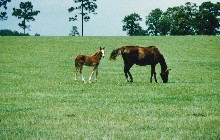
Ocalais a magical land of gurgling mineral springs,
carpets of emerald-green grass that the springs feed, and handsome thoroughbred
horses that feed on the grass. White corral fences neatly divide its rolling countryside,
where foals romp and rambling ranch houses command. Some of the ranches allow visitors
in to tour or ride horses and learn about how the thoroughbreds are trained for
racing.

Downtown Ocala, a quiet, compact district surrounded by modern-day stores and hotels,
preserves the commercial buildings and ornate Victorian homes from its boom era
in the 1930s. Delis, pubs and antiques and other shops take up residence behind
brick façades around a pretty little gazebo park. In the residential historic district
along Fort King Avenue, more than 200 wooden, steamboat-era mansions range in style
from Queen Anne Revival to Italianate.
Other attractions in Ocala include the Appleton Museum of Art, an eclectic collection
of priceless treasures; the Don Garlits Museum of Drag Racing, honoring a local
citizen who made it big on the oval track, with classic dragsters and other antique
automobiles; and Discovery Science Center, with hands-on indoors and outdoors exhibits.
The Ocala National Forest spreads at Ocala’s backdoor, providing recreational access
to the area’s pristine spring lands and preserving vast acreage of pine forest laced
with rivers, streams and the lakes they form. The forest is immense – more than
383,000 acres, 19 developed campgrounds and two day-use recreational areas. Most
popular among the camping recreational areas, Juniper Springs is beautified by an
old waterwheel and mill at its refreshing swimming hole, naturally climate controlled
to 72 degrees year ‘round. Alexander Springs is best for canoeists. One of its hiking
trails takes you down the path of ancient civilizations, explaining how the Timucuan
Indians used different plants for food, clothing and entertainment. Other trails
in and around the forest are part of the Florida National Scenic Trail. Cyclists
can pedal along the 22-mile-long Paisley Woods Trail, which connects Alexander Springs
in the north to Clearwater Lake in the south.
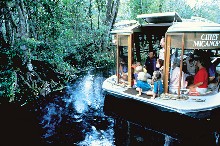 Since 1878, the
biggest attraction in the area has been Silver Springs, actually considered Florida’s
first tourist park. It attracted folks with its sparkling spring waters and the
first-ever glass-bottom boats for spying at the fish and archaeological artifacts
at the springs’ bottom. Many a movie and TV show have used the lush location for
filming, including Tarzan, Sea Hunt and Creature from the Black Lagoon.
Today, live animals, a Jeep safari, boat tours, a tots play land and top-name country
entertainment keep the park lively. Next door, Wild Waters water park adds to the
excitement during the summer, with slides, flumes and kiddie fountains. Since 1878, the
biggest attraction in the area has been Silver Springs, actually considered Florida’s
first tourist park. It attracted folks with its sparkling spring waters and the
first-ever glass-bottom boats for spying at the fish and archaeological artifacts
at the springs’ bottom. Many a movie and TV show have used the lush location for
filming, including Tarzan, Sea Hunt and Creature from the Black Lagoon.
Today, live animals, a Jeep safari, boat tours, a tots play land and top-name country
entertainment keep the park lively. Next door, Wild Waters water park adds to the
excitement during the summer, with slides, flumes and kiddie fountains.
Small towns sprinkled around Ocala were created by spring land tourism or the phosphate
mining that brought prosperity to the area west of Ocala at the turn of the 20th
century. Dunnellon is a prime example
of the latter and its historic downtown buildings and their dreamy oak-shaded streets
stand as proof of the golden years. The town’s annual Boom Town Days fills those
streets with costumed fairgoers, craft shows, antique car exhibits and music.
Today, Dunnellon draws most of its business from those who come to visit nearby
Rainbow Springs State Park. Yet another of the region’s vigorous springs, this one
is Florida’s second largest artesian spring, pumping about 500 million gallons of
pure, clean water daily into the pristine Rainbow River. Snorkelers, divers, swimmers,
paddlers, inner tubers, boaters and fishermen alike use the river and its springs
as a source of wholesome entertainment you can’t find in any theme park. The Dunnellon
area also provides access to the 46-mile paved Withlacoochee Trail and the Cross
Florida Greenway, a 110-mile corridor once earmarked for a barge canal, today used
for trails across Florida’s ridges, rivers, lakes and wetlands. It traverses Silver
River State Park, where visitors love to canoe in clean, clear waters and visit
the park’s museum and environmental education center.
Along the way, campgrounds, a pioneering eco-lodge, endearing bed and breakfasts,
and small lakefront fishing resorts welcome travelers to stay in this part of Florida,
removed from bustle and ensconced in rural heartland lifestyles.
|
|